


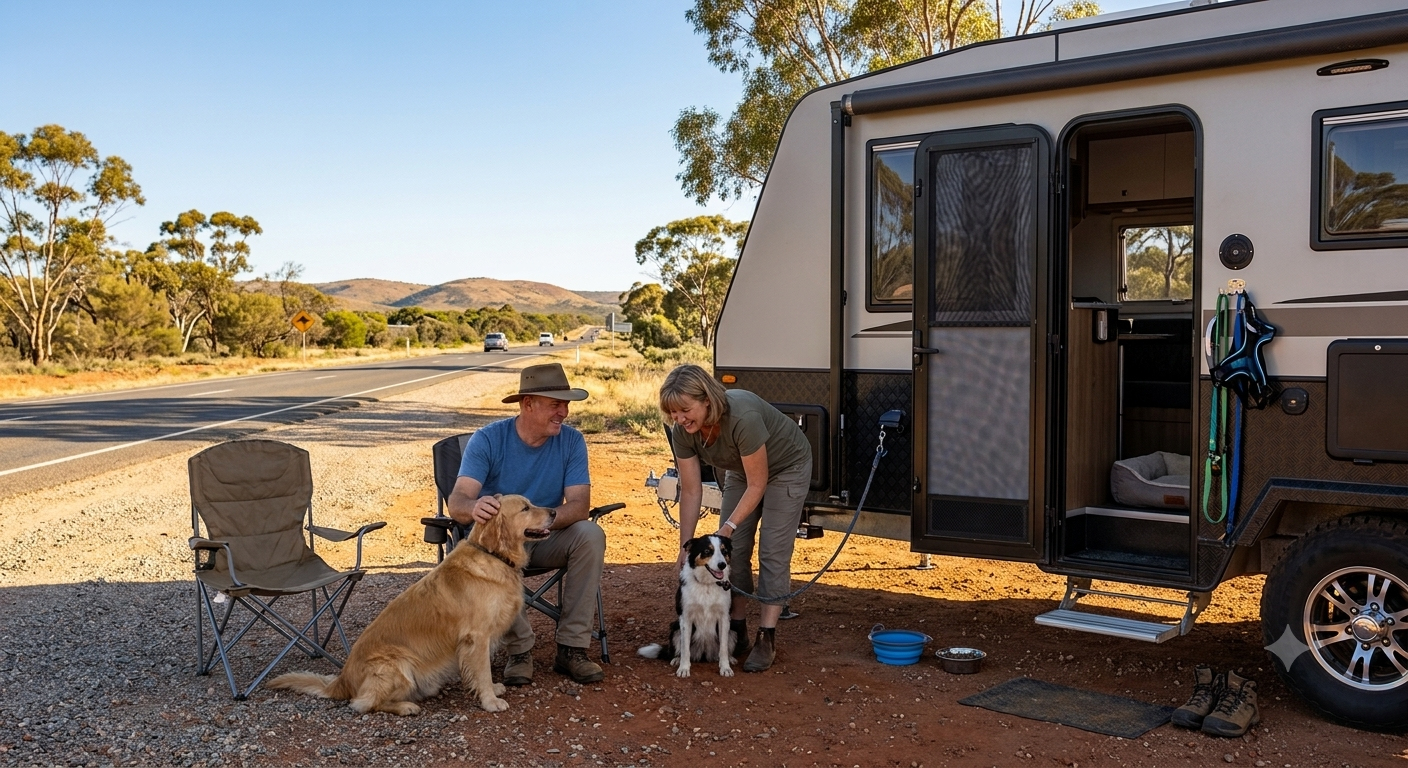
Getting the travel setup right
Restrain pets properly while driving. A pet loose in the tow vehicle is a real hazard in an emergency stop, for the animal and for everyone else in the car. A properly fitted harness attached to a seatbelt anchor, or a secured crate, is worth treating as non-negotiable rather than optional.
Plan for temperature, not just comfort. Australian conditions can turn a parked tow vehicle or an unshaded caravan into a genuine danger for a pet within minutes on a hot day. Never leave a pet in a closed vehicle, and think through shade and airflow at every stop, not just overnight.
Break up long drives. Just like the humans in the car, pets do better with regular stops to stretch, drink water and toilet — build this into your drive planning rather than treating it as a delay.
Setting up the caravan itself
Designate a pet space early. Dogs and cats settle into travel routines faster when there's a consistent spot that's theirs — a bed or crate in the same location each time helps reduce anxiety, particularly for animals that aren't used to a mobile home.
Secure anything that could shift while towing. Water bowls, pet beds and loose gear all move around on corrugated roads. A non-slip mat under bowls and a secured crate for driving stretches prevents both mess and stress.
Think about screen doors and fly screens. A pet-proof screen door lets airflow through at camp without the risk of an animal pushing through and wandering off, particularly important at unfamiliar free camps near roads or wildlife.
Finding pet-friendly places to stay
Not every caravan park accepts pets, and those that do often have specific rules — leash requirements, restricted areas, or breed and size limits. A few practical habits make this easier:
Call ahead rather than relying solely on a website listing, since pet policies change and aren't always kept current online
Check whether national parks along your route allow pets — many don't, or only in specific camping areas, which affects route planning more than people expect
Free and low-cost bush camps are often more flexible on pets than commercial parks, but come with their own considerations around wildlife, snakes, and lack of fencing
Health and safety on the road
Update vaccinations and parasite prevention before a long trip, particularly tick and heartworm prevention if you're heading into tropical or northern regions where exposure risk is higher than at home.
Carry a basic pet first aid kit separate from your own, including any regular medications with enough supply to cover delays or extended stays.
Know the location of the nearest vet along remote sections of your route, particularly through areas with long distances between towns — a quick search before you lose signal beats scrambling for information during an actual emergency.
Watch for region-specific risks. Cane toads, ticks, snakes and extreme heat all vary significantly by region, and a dog well-adjusted to one part of the country can be genuinely unfamiliar with hazards in another.
Making the caravan itself pet-ready
If you're still deciding on a caravan and travel regularly with a pet, it's worth factoring into the buying decision — floor material that's easy to clean, enough open floor space for a bed or crate without blocking walkways, and external storage for pet gear separate from your own all make daily life on the road noticeably easier. Our beginner's guide to choosing the right RV caravan covers the broader layout considerations worth thinking through alongside this.
Contact an advisor if you'd like to talk through layout options that work well for travelling with pets.